
Hi everybody, I hope you’re having a good day. Today, I’m going to tell you about a case…that gave me a headache. This is the case of a man that not only chose crime, but was objectively bad at it. This would be hilarious, if a dozen families hadn’t gotten their lives ruined by his incompetence. Without further ado, here’s the story of Jean-Claude Bonnal, also known as “The Chinese”.
Little clarification before we start. Jean-Claude is called “The Chinese” because he is Asian, and French people tended to suddenly forget about the concept of geography a few years ago when faced with a person of color (they still do, but to a lesser extent). However, he is Vietnamese, so I won’t use this nickname, as I can tell this story without using it. Yes, Jean-Claude is an asshole of epic proportions, but I can convey that point without being an ass myself, and that’s exactly what I’ll do. Now let’s start.
A long journey to the Parisian criminal underworld
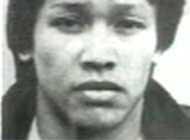
Jean-Claude Bonnal starts his life on hard mode. Born on February 4th, 1953 in Saigon, he’s the third of 12 children. He doesn’t get to know his birthplace and rapidly leaves the country with the rest of family because of the First Indochina War. The family goes to France and settles in Vitry-sur-Seine, south of Paris. Jean-Claude, struggles to integrate in the neighborhood, where everybody calls him “The Chinese” and makes racist remarks. Things aren’t really better at home, where he has to contend with his father’s alcoholism.
In 1969, at 16, he sadly loses 2 of his brothers in a basement fire. This incident, for which he is blamed by his father, plunges him into depression. He stops going to school, works small jobs, and ends up turning to crime.
After deserting his military service, he joins a local gang in 1972. The gang in question regularly meets in Vitry’s bars, and Jean-Claude tries to climb up the ranks, but the local criminals consider him too unpredictable, unmanageable. He is thus limited to…side character tasks.
His next “job” totally shows why he isn’t seen as the next big dog.
First big robbery, first deadly blunder
In July 1973, the gang wants to go on vacation and decides to rob an elderly lady to get the money for it. They break into her home, bind her and gag her. Sadly, the gang binds her too tight and she dies asphyxiated. None of the robbers realize it though, so they keep trashing the apartment, and leave once they consider that they have stolen enough. That doesn’t mean they are satisfied, and they start another robbery immediately. This one goes better in the sense that nobody dies, but they get caught not long after.
The group is indicted for first-degree murder and robbery, and ends up risking the DEATH PENALTY (in effect until 1981) for stealing an amount of money that they would have easily gotten by getting summer jobs, which were easy to find since the unemployment rate was half of what it is today.
Why am I telling you that ? Because that level of poor decision-making will be the standard for the rest of this article. Prepare yourself.
The wannabe gangsters go to preventive detention and defend themselves by saying that if they had known that the elderly lady had died, they wouldn’t have committed a second robbery right after. The prosecutor accepts that argument, and lowers the first-degree murder to manslaughter. Now, instead of the guillotine, the crew risks 15 years in prison.
The trial starts in 1979, and obviously the whole gang is found guilty, and Jean-Claude gets a 10-year sentence. He gets released on June 30th, 1981, after 8 years. He moves to Orly, still near Paris, and meets Martine. The 18-year old is touched by the 28-year-old convict’s life story, and gets bogged into a relationship with him.
The couple has a son in 1982, but can’t afford to raise him correctly. Faced with this difficulty, what do you think Jean-Claude does?
A) He asks for welfare
B) He finds a job
C) He asks his family for help
D) He abandons the child
It’s obviously answer E: he plans a robbery, screws up, and goes back to prison!
Incompetent, but stubborn

In April 1983, Jean-Claude robs a supermarket. He does so without a mask, so the witnesses allow the investigators to put together a sketch that gets him identified and arrested in no time. He goes back to jail, indicted on armed robbery. He’s a re-offender, so he risks 20 years in prison. He promises Martine that it’s the last time, but we know it’s not. She believes him (or pretends too), and the two get married at the Fresnes Penitentiary Center in January 1984. In June 1985, Jean-Claude gets sentenced to 7 years in prison.
He is released in April 1988, so we can say that for 1 day of his previous time as a free man (1981-1983), he did 2.8 days of incarceration. That’s a sad ratio…
As a 35-year-old felon, he has trouble finding a job. He trying at least, that’s a step in the right direction. However, the pressure gets worse when Martine gets pregnant again. How do you think Jean-Claude reacts?
A) He keeps trying to find a job
B) He signs up for the Foreign Legion to get a steady stream of income
C) He becomes a sex worker
D) He sends a letter to the President
Again, the answer is E: he plans a robbery, screws up, and goes back to prison!
The last robbery?
In November 1988, he robs a bank in the 16th district of Paris (where the rich people live) with three accomplices. The police rapidly gets alerted, and as soon as they arrive, a shootout begins. One of the police officers is gravely injured, but the four men still end up in handcuffs. They go down for armed robbery (another re-offense for Jean-Claude) and attempted murder on a person in position of public authority.
On December 30th, Martine gives birth to a little girl, and keeps on supporting her stupid husband, saying that he committed this crime to help his family.
The judges aren’t moved, and in 1991, they sentence Jean-Claude to 12 years in prison, an awfully light sentence considering the crime and the track record. He is released on January 30th, 1997. New freedom-incarceration ratio: 1 day out of prison=2 weeks inside a cell.
This time, Jean-Claude does something we stopped expecting…he finds a job!
He starts working in a restaurant, and yes, there is a little case of counterfeit money that gets into the mix, but at least he tries to give his family some semblance of normalcy.
It lasts around 10 months.
The most audacious one yet
On November 24th, 1998, an exchange office is robbed in Paris, at the Printemps Haussmann shopping center. The robbers are described as one Asian man, and one Maghrebian man. They take the money (amounting to around 68 000 euros, or 79 681 USD), and run. However, they take their balaclavas off once they are outside, and the Maghrebian man is wearing a bright yellow coat, attracting an absolutely counterproductive amount of attention. This stupidity is familiar, but I can’t exactly name the robbers for reasons you will understand later.
One of the people witnessing this is Émile Ferrari, a former bodyguard. He tries to immobilize one of the robbers and gets shot in the head. The two robbers threaten the rest of the crowd and run away, leaving him for dead. He survives though, but loses an eye.
Witnesses give contradictory statements, which complicates the investigation. Plus, the main witness, Émile, has memory issues and also contradicts himself. However, an informant tips the investigators, naming Jean-Claude Bonnal, 45, and Mohamed Benamara, 49, as the robbers.
Both are arrested on the 16th and 17th of December, and deny the accusations as soon as they are in the interrogation room. They even say that they don’t know each other. They give flimsy alibis, telling the police that they were with friends that either are nowhere to be found or saying that they weren’t. Jean-Claude’s apartment is searched, and the investigators find foreign currencies as well as a Colt .45, which is found to be the weapon used in the robbery. Jean-Claude still doesn’t confess, and says that he was asked to keep these very suspicious elements. By who? Nobody knows…
Both suspects are indicted and sent to detention for armed robbery and attempted murder, strike 4 for Jean-Claude. However, their lawyers argue that the evidence doesn’t justify the preventive detention, which is getting we-might-have-to-get-a-human-rights-lawyer-involved type of long.
The lawyers start asking for the two defendants’ release, and their demands are ignored at first. However, even the prosecution ends up having to admit that their case isn’t tight enough to justify that length of detention. Mohamed gets released on December 4th, and Jean-Claude gets out on the 26th. No Christmas for him.
Now that he’s free, do you think he:
A) He prepares his defense for the upcoming trial
B) He spends time with the two children he barely knows
C) He finds a job and puts money aside for his family to live on in case he gets convicted
D) He catches up on The Young and the Restless
You already know where I’m going with this…
The bloodbath
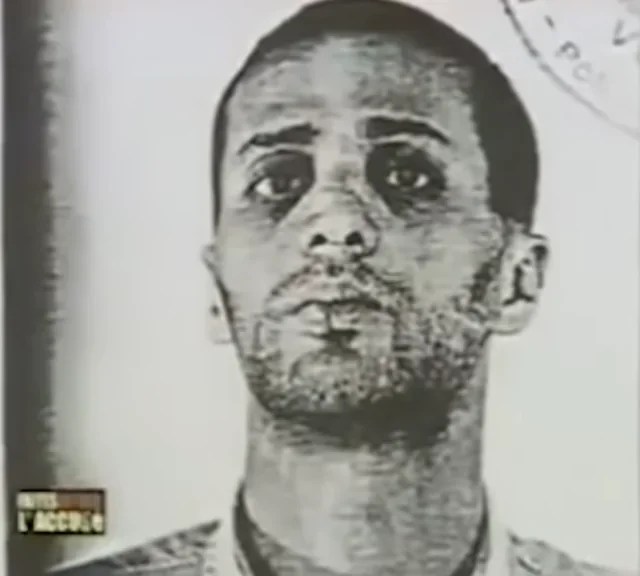
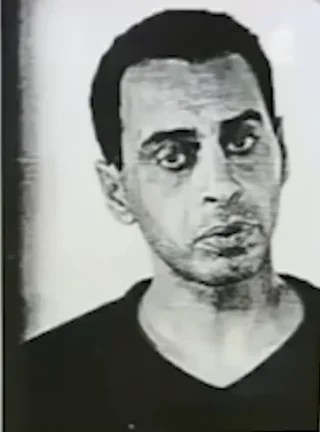
On October 6th, 2001, Brahim Titi and Hakim Bouhassoune enter a bar named Le Fontenoy, in Athis-Mons. They sit at the counter and have a drink, probably enjoying the good vibes of this small establishment owned by a hardworking couple who is appreciated by everyone in the area.
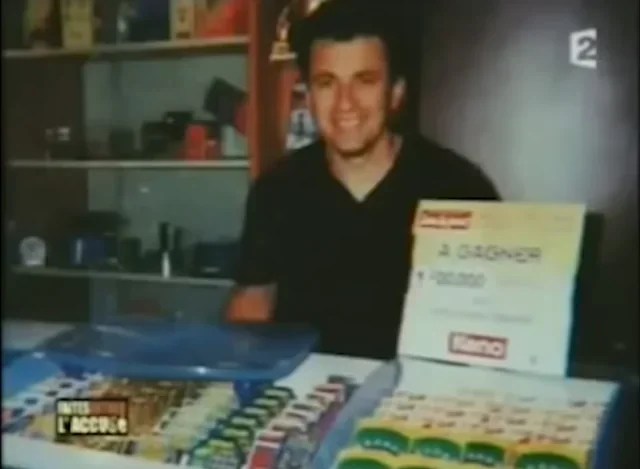
When the customers leave, Jean-Claude arrives, face covered by a balaclava. The three robbers point their guns at Gildo Alves (38) and lock his wife Marie-Louisa (34), their daughter Sandra (9), the cleaning lady Albertina (34), and the waitress Virginie (24) in the bathroom after tying them up with electrical wire.
Once they have the money, the robbers take the adults in the basement, one by one, and shoot them in the head execution-style. Gildo also gets a bullet in the groin for a reason we’ll never know. Sandra is spared, and the robbers (now killers) leave with the equivalent of 1 574€ (1 884 USD) and Marie-Louisa’s debit cards. Just so you know 1 574€ is less than monthly minimum wage in France. Four people died for money the guys would have gotten by working three days a week as cashiers. Makes me sick.

Sandra manages to free herself and finds the bodies in the basement. She goes to a window and calls for help, alerting passing civilians to the massacre that just occurred.
Once the police arrives, Sandra describes the two robbers she saw, but tells them that Albertina told her that there were three of them.
The robbers try to use Marie-Louisa’s debit cards the following day, but they have the wrong PIN codes and the cards get swallowed up by the ATM, which doesn’t have a working camera.
At the same time, the investigators analyze the crime scene, and find 380 caliber bullets fired by an AMT Backup, a model that is so rare in France that this is actually the first recorded case involving it.
Sandra’s descriptions help the police create sketches of the offenders, and investigators quickly recognize Brahim Titi, a local burglar “working” in the same circles as Jean-Claude. From him, they manage to deduce that one of the most incompetent robbers in French history was at the scene of the crime. Sadly, this revelation doesn’t come soon enough to stop the next bloodbath.
On October 16th, Jean-Claude, Brahim and three other accomplices, Djamel Bessafi, Zahir Rahmani and Chérif Asslouni (where does he keep finding these people??), try a burglary in a suburban home in the Plessis-Trévisse. They break in and take the Pernès family, composed of the parents, the son and the daughter, hostage. However, they don’t notice the Pernès’ niece, who hides in a bathroom and calls the police.
Five policemen from the Chennevières-sur-Marne precinct answer the call. Among them are Patrick Le Roux (33), Yves Meunier (27), Paul Desbiens, Alexandre Riebel and Lionel Levecq. Patrick discreetly approaches the property and confirms the state of the situation. Even though they don’t have bulletproof vests, the policemen decide to intervene.
The robbers abandon their hostages and try to run, but the policemen are closing in. That’s when the gunshots start. Yves Meunier is shot three times and instantly dies, while Patrick Le Roux is hit by bullet that will kill him a couple of hours later. Lionel gets shot in the back, but will survive his injury.
On the other side of the law, Djamel gets a taste of friendly fire, and ends too injured to get away with the others. This small-time drug dealer is arrested and indicted for complicity in two murders of people in a position of public authority, attempted murder of a person in a position of public authority and armed robbery.
The investigators examine the crime scene and find a black glove, a backpack containing a balaclava, an empty Beretta charger and a 9mm shells.
On October 19th, Yves and Patrick are buried with honors. Patrick was an appreciated colleague, and had just been moved to the Chennevières precinct. Born in Brittany, he had started his career in the 19th district of Paris but wanted to work in a more peaceful environment. He leaves behind his wife and three-year-old daughter. Yves, on the other hand, had spent his whole career in Chennevières and was preparing for the birth of his own child.
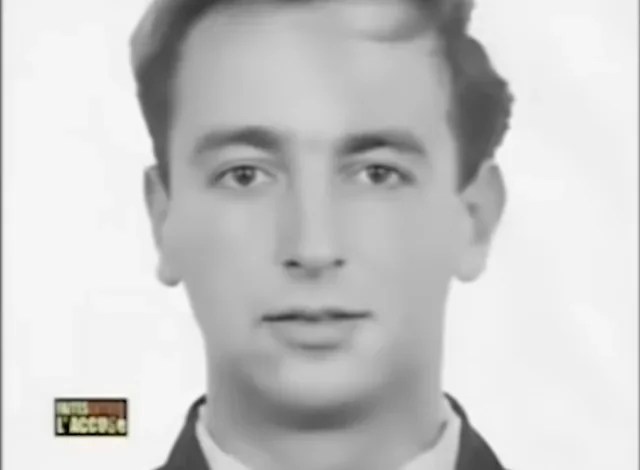

From left to right: Yves Meunier and Patrick Le Roux (source: Faites Entrer l’Accusé)
On the day of their funeral, Jean-Claude, Brahim and Hakim, are arrested for the Athis-Mons massacre. Sandra recognizes Brahim and Hakim, but can’t identify Jean-Claude who was wearing a balaclava on that fateful day.
Once seated in the interrogation room, Brahim only admits to having a drink at the bar with Hakim. Hakim, on the hand, gives a full play-by-play on the second day, and designates Brahim as the shooter while putting Jean-Claude at the scene. In another room, Jean-Claude tells investigators that he was with his mistress (does Martine know about that?) on that night. The mistress doesn’t confirm that version, but has plenty of things to say.
The lovers saw each other that day, but Jean-Claude left around 9pm without telling her where he was going. The mistress also tells investigators that Jean-Claude recently got rid of three firearms, including one that had 380 engraved on it, and a Beretta. Also, Jean-Claude saw a news report on the massacre not long after it occurred and told her that he hoped he hadn’t left any blood there. Long story short, Jean-Claude is lying.
The three robbers/murderers are indicted and put in preventive detention, while investigators use Jean-Claude’s phone records to identify his other accomplices. They rapidly discover that he has regular contacts with Zahir Rahmani and Chérif Asslouni, both aged 21.
Chérif is arrested on October 25th, 2001, but Zahir is on the run. Chérif admits his participation in the Plessis-Trévisse burglary and shootout, but designates Jean-Claude as the shooter in that debacle. He is indicted and joins his friends at the Fleury detention center.
The investigation continues, and Jean-Claude’s DNA is found on the glove found at the Plessis-Trévisse, while Brahim’s DNA is found on the balaclava. The glove has gunshot residue on it, which makes Jean-Claude the n°1 candidate for the shooting.
Zahir, the only one of the crew still free, is caught on November 5th, 2001 after getting recognized. He confirms Chérif’s version of events, but after spending some time in the same detention center as Jean-Claude and Brahim, they both retract their statements and say the two shooters are actually innocent. What a coincidence…
On February 14th, 2002, Jean-Claude has a Valentine’s Day date with the investigators. He is interrogated regarding the Plessis-Trévisse shootout. He denies any involvement and affirms that the DNA found at the scene was planted by investigators. He gets indicted for this case and goes back to his cell. On the next day, Brahim is interrogated, and admits his participation. However, he says that neither him nor Jean-Claude shot the policemen. He is also indicted.
The two cases create a big controversy, since Jean-Claude was already awaiting another trial when everything happened. Let’s add that we are a couple of months away from the presidential elections in a country that faces a surge in criminality, and we get month-long debates and protests. Jean-Claude becomes the face of a justice system that’s become too lenient. Martine does her best to defend her husband, but she’s no match for politicians, magistrates and Jean-Claude’s own actions.
On February 7th, 2003, the trial for the Printemps Haussmann robbery begins. Only Jean-Claude is present, because Mohamed Benamara is on the run. Jean-Claude surprises everyone in the courtroom. People expected a big, strong villain, but they get an average-looking man.
His defense relies heavily on the contradictions in witnesses’ accounts and the lack of evidence. Surprisingly, Jean-Claude doesn’t use his childhood as a sob story, and says that he doesn’t have to talk about his private life. Maybe it’s this lack of explanation that does him in and gets him sentenced to 18 years in prison. After hearing the verdict, Martine goes home and attempts suicide.
In August 2003, Mohamed is captured in Spain.
A year later, in June 2004, the appeal trial starts. Mohamed is busy having his first trial, so Jean-Claude is alone again. His defense uses Émile Ferrari’s faulty memory as their main argument. Plus, the video-surveillance isn’t exactly HD and the relationship between Jean-Claude and Mohamed isn’t proved by a lot of evidence. Do you see it coming?
On June 16th, 2004, Jean-Claude is acquitted, but stays incarcerated for the 2001 robberies and murders. Mohamed Benamara is acquitted in December 2005.
On January 4th, 2006, the trial for the Athis-Mons and the Plessis-Trévisse massacres begins.
Hakim Bouhassoune seems to be the only one with regrets, and confirms Sandra’s (now 13) testimony. The young girl also recognizes Jean-Claude’s voice, formally identifying him for the first time. Towards the end of the trial, Brahim Titi makes a “revelation”: Jean-Claude is the one who shot everyone back there. Late confession or desperate lie? At this point, do we really care?
What the victims’ families mainly want to know is why. Albertina’s two daughters made the trip from Cabo Verde to know why, but everybody will walk out with unanswered questions.
On February 1st, Jean-Claude is sentenced to life with a 22-year custodial sentence. Brahim Titi also gets life, but without a custodial sentence. Hakim Bouhassoune gets 25 years, Djamel Bessafi and Zahir Rahmani 15 years, and Chérif gets 8 years.
After the trial, the French state is sentenced regarding Jean-Claude and Mohamed’s long preventive detention in the Printemps Haussmann case. Jean-Claude is offered a settlement, but refuses it to avoid another controversy. Finally, a good decision.
On June 4th, 2007, the appeal trial begins. Jean-Claude and Chérif’s sentences are confirmed, but Brahim’s gets reduced to 25 years. Hakim, on the other hand, gets his sentenced upped to 30 years. Zahir and Djamel get their sentence reduced to 13 years.
That means that at least Zahir, Djamel and Chérif are out. I don’t know about Brahim, but I know for sure that Jean-Claude is still incarcerated, which is probably for the best.
Tell me what you think about this case down below, or on r/Murder_Wine_Cheese or Bluesky. I hope you’ll find some money on the ground today, and I’ll see you next time!
 Murder, Wine & Cheese
Laisser un commentaire